Understand the Best Uses for Different Fabric Weights at a Glance
If you work in packaging, custom products, daily-use goods, or factory sourcing, there is one key specification you cannot avoid: the basis weight, or GSM, of nonwoven fabric.
Many people only know that “the higher the GSM, the thicker and stronger the fabric.” But what weight is suitable for bags? What weight works best for dust protection? And what should you choose for outdoor use, load-bearing applications, or repeated use?
Nonwoven fabrics at different weights vary significantly in thickness, stiffness, tensile strength, and overall feel. Choosing the wrong weight can result in poor appearance, easy tearing, excessive transparency, insufficient load capacity, or products that look too soft and lose their shape.
This guide provides a practical comparison of nonwoven fabric weights and their typical applications, from lightweight grades to heavier industrial grades. It is designed as a quick reference for purchasing, customization, quotation, and order handling.
What Does “GSM” Mean for Nonwoven Fabric?
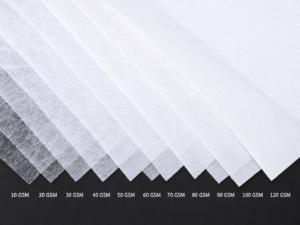
The standard unit for nonwoven fabric weight is g/m² (grams per square meter), commonly referred to as GSM.
In simple terms, a higher number generally means thicker fabric, higher density, better toughness, stronger load-bearing capacity, and a stiffer, more structured feel. Under the same material and manufacturing process, lower-GSM fabric is lighter, thinner, and more breathable, while higher-GSM fabric is thicker, more wear-resistant, and better at holding its shape.
Most custom nonwoven products used in everyday packaging are made from PP (polypropylene) spunbond nonwoven fabric. It is widely used for packaging, storage, dust protection, household products, and industrial applications because it offers moisture resistance, water repellency, low odor, heat-sealing compatibility, and convenient needle-free forming by heat pressing.
 |
Complete GSM Classification: Typical Uses from 20 GSM to 200 GSM
20–30 GSM | Ultra-Light & Soft: Disposable and Breathable Applications
Material Characteristics
Lightweight and thin with good light transmission and excellent breathability. The fabric feels soft but has relatively low tensile strength and little stiffness, making it more suitable for disposable or auxiliary applications.
Typical Applications
Disposable medical auxiliary materials and inner mask layers
Disposable bed sheets, pillowcases, and breathable liners for foot-spa or beauty applications
Thin dust-isolation liners for products and inner cushioning for gift boxes
Seedling and gardening underlays, plus water-permeable separation layers
Summary: Best for breathable, disposable, and separation/protection applications. It is not intended for load-bearing products or rigid formed items and is mainly used as a lightweight liner or underlay.
40–60 GSM | Lightweight & Practical: Ideal for Dust Covers
Material Characteristics
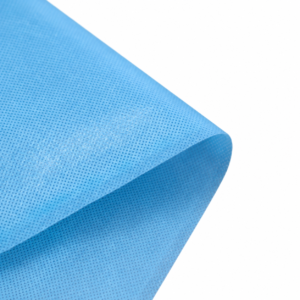
Thin but less transparent, with better toughness than ultra-light grades. It is soft and flexible, offers good dust and moisture protection, and provides excellent value for basic household applications.
Typical Applications
Daily dust covers for furniture, appliances, and machinery
Simple disposable storage covers and appliance dust covers
Garment dust covers and temporary protective sheets
Auxiliary liners for baby care and lightweight backing layers for picnic mats
Summary: A cost-effective choice for dust protection, covering, and moisture resistance. Best suited to flat-covering applications that do not require a rigid or structured shape.
70–90 GSM | Standard General-Purpose: Popular for Everyday Storage
Material Characteristics
A balanced medium weight with moderate softness and stiffness. It has a lightly structured feel, resists deformation reasonably well, and provides basic tensile strength while remaining flexible and practical. This is one of the most versatile GSM ranges.
Typical Applications
General storage bags, organizer bags, and quilt or bedding storage bags
Simple nonwoven shopping bags and promotional bags
Dust-protection dividers for shoe cabinets and wardrobes
Children’s sandpit underlays and simple household protective sheets
Summary: A strong all-around choice for household storage and everyday packaging. It offers excellent cost performance, and many standard nonwoven products on the market fall within this GSM range.100–120 GSM | Medium-Heavy & Structured: Mainstream for Custom Packaging Bags
Material Characteristics
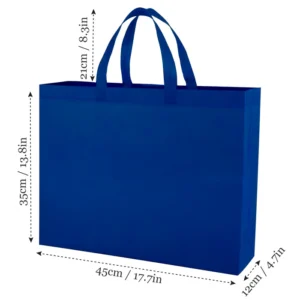
Noticeably thicker with better shape retention and less sagging. Tensile strength is significantly improved, with better resistance to wear and pulling. After heat sealing or heat pressing, the finished product has a cleaner outline and a more premium appearance.
Typical Applications
Premium promotional tote bags and corporate gift packaging bags
Flour bags, rice bags, and packaging bags for grains and dry food products
Heavy-duty moving and storage bags and three-dimensional garment dust covers
Outer gift-box packaging and customized product storage covers
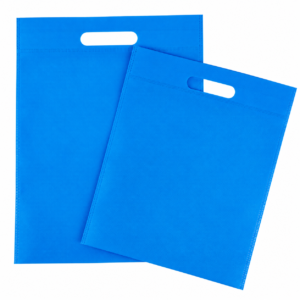
Summary: A mainstream GSM range for commercial customization. It offers good structure, practical load capacity, and a more attractive appearance, making it one of the most commonly customized specifications for factories.130–160 GSM | Heavy-Duty & Load-Bearing: Wear-Resistant and Reusable
Material Characteristics
High-density and thick, with a firm, substantial hand feel and excellent stiffness. It offers strong resistance to tearing and stretching, good water resistance, and improved durability for repeated long-term use.
Typical Applications
Heavy-duty moving bags and large-capacity luggage or storage bags
Three-dimensional dust covers for industrial equipment, machinery, and instruments
Outdoor picnic mats and fabric surrounds for children’s play or sand areas
Durable supermarket shopping bags and heavier packaging bags for local specialty products
Summary: Designed for load-bearing, wear resistance, and repeated use. Suitable for large-capacity, high-load, and long-term applications.
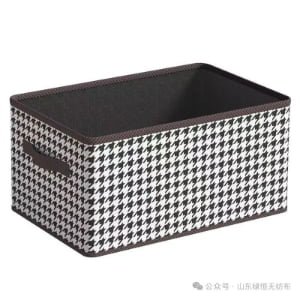
Quick GSM Selection Guide
For fast product selection, use this simple reference:
| Fabric Weight | Typical Use |
| 20–30 GSM | Disposable breathable liners and underlays |
| 40–60 GSM | Dust covers for furniture and appliances |
| 70–90 GSM | Household storage and standard nonwoven bags |
| 100–120 GSM | Gift bags, flour bags, and grain packaging |
| 130–160 GSM | Moving bags, packing, and outdoor applications |
| 180–200 GSM | Industrial equipment covers and heavy-duty applications |
Note on images: The original image positions and source links have been retained. The source image server could not be accessed by the document-generation environment, so the images are provided as clickable original-image links rather than embedded copies. This avoids substituting or altering the original artwork.

About
Experienced manufacturing and supply chain specialist focusing on eco-friendly non woven packaging, custom canvas totes, and industrial bulk sourcing solutions.
Request Custom Bags OEM Quote →